
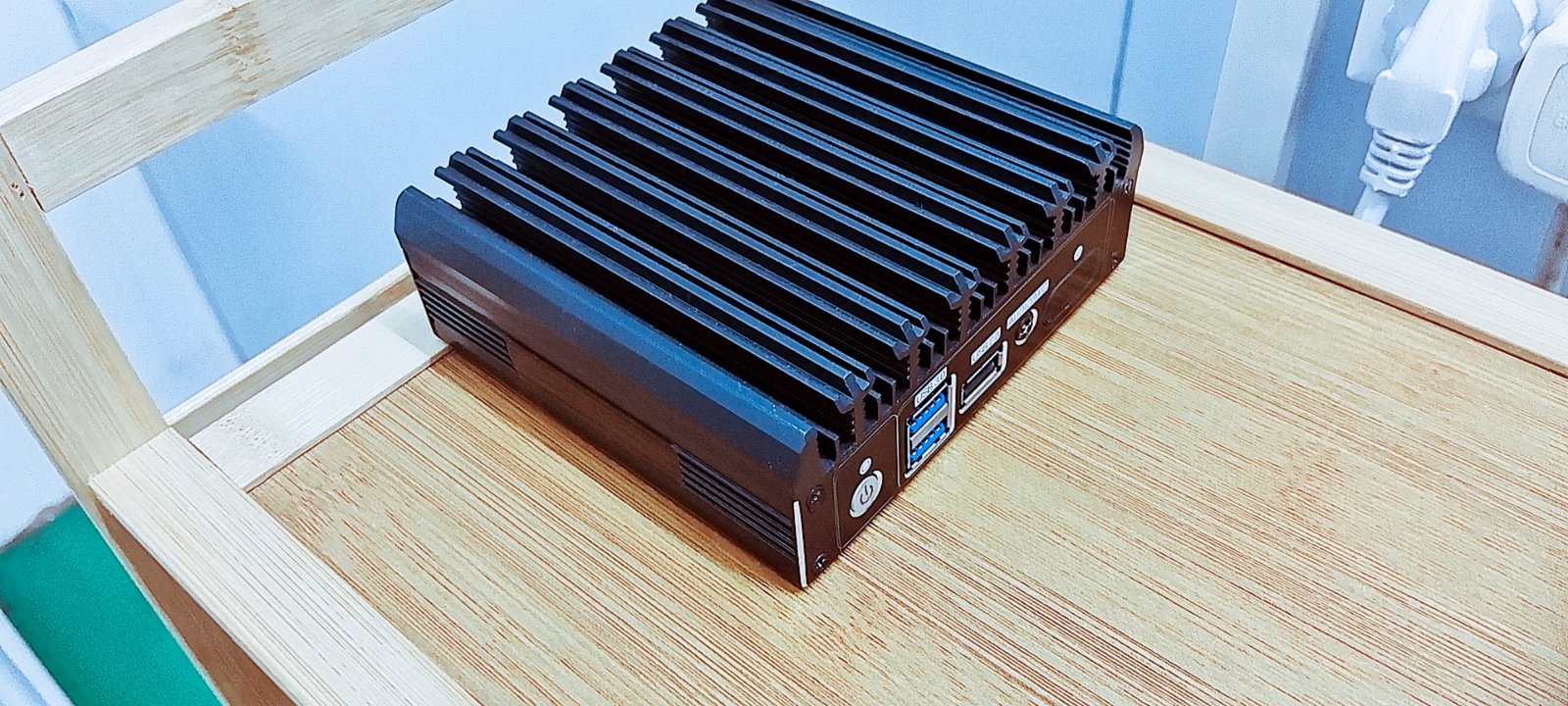
In the world of industrial computing, reliability often matters more than raw speed. Fanless mini PCs have carved out a significant niche thanks to their silent operation, rugged durability, and compact footprint. The device pictured here is a prime example of this category — a passively cooled, fanless industrial mini PC built for 24/7 operation in demanding environments.
Design and Thermal Management
The most striking feature of this mini PC is its all-aluminum, heavily finned chassis. The deep vertical ridges across the top and sides are not just for aesthetics — they dramatically increase the surface area available for passive heat dissipation. Without a single fan, the entire enclosure acts as a massive heatsink, drawing heat away from the internal CPU and radiating it into the surrounding air. This makes it ideal for dusty workshops, factory floors, or any setting where moving parts (and the dust they attract) are best avoided.
Port Selection and Connectivity
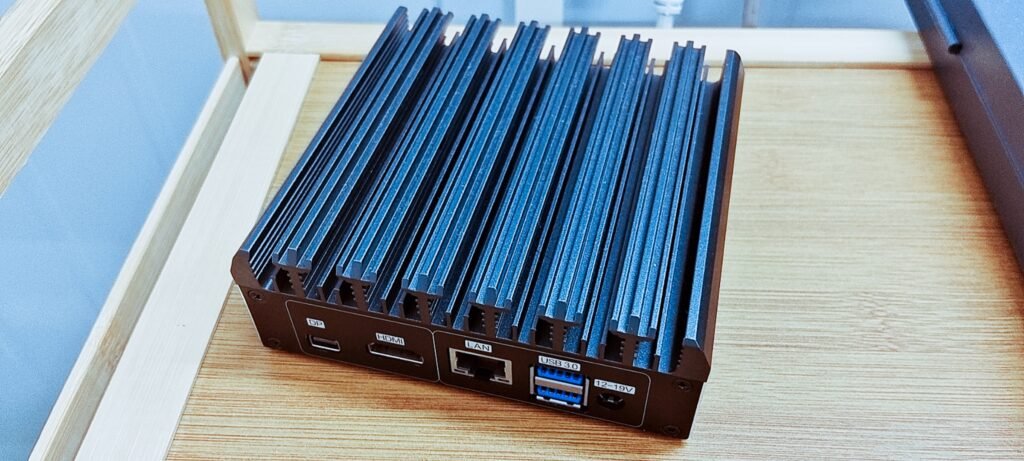
Despite its small size, the rear I/O panel is well-equipped for industrial and networking use. From left to right, it features:
- USB-C (DP Alt Mode): Supports modern display output alongside digital signage connectivity.
- HDMI: A standard video output for monitors or projectors.
- RJ45 LAN (Ethernet): High-speed wired networking, often with multiple ports on these devices for use as firewalls or routers.
- USB 3.0 Ports (×2, Blue): High-speed data transfer for storage devices or peripherals.
- DC Power Input (12–19V): Low-voltage DC input for safe, efficient power delivery in industrial settings.
Typical Use Cases
These fanless industrial PCs are commonly deployed in a variety of scenarios:
- Network Security: Running pfSense, OPNsense, or other firewall/VPN software as a dedicated appliance.
- Edge Computing: Processing IoT data locally before sending it to the cloud, reducing latency.
- Digital Signage: Powering advertisements and information displays in retail or public spaces.
- Industrial Automation: Acting as a headless controller for machinery and sensors.
Why Go Fanless?
The advantages of passive cooling go beyond silence. Fewer moving parts mean fewer failure points — a critical factor in systems expected to run for years without maintenance. Fanless designs also prevent dust ingress, which can clog traditional cooling fans and lead to thermal throttling or failure. For industrial users, this translates to lower total cost of ownership and higher uptime.
While they may not win any benchmarks against desktop gaming rigs, these compact computers excel exactly where they are meant to: reliable, quiet, always-on operation in the spaces where conventional PCs cannot survive.
Leave a Reply